
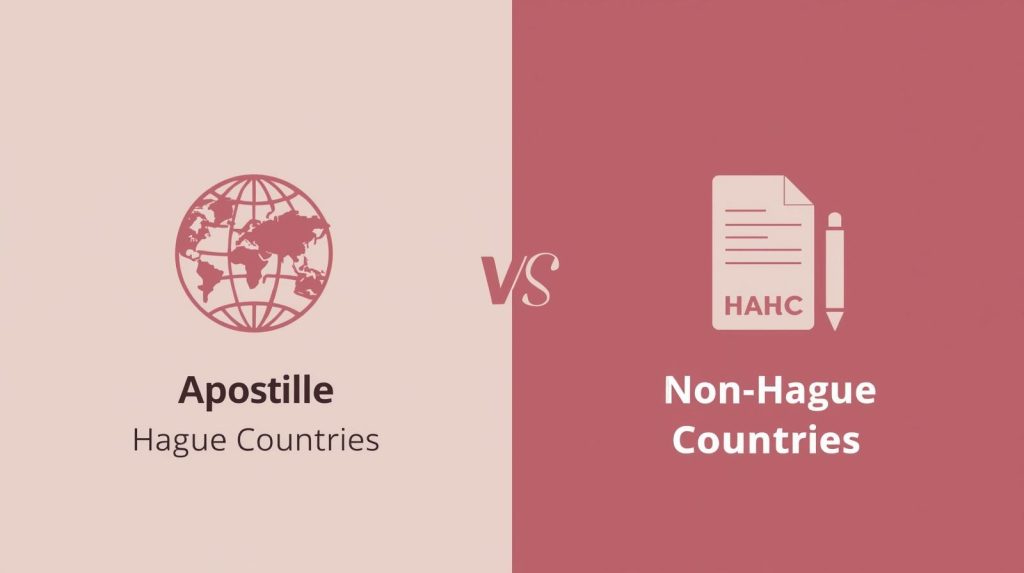
If you’re sending documents overseas, you may hear the terms apostille and authentication and wonder which one you actually need. Although they sound similar, they apply to different types of countries and follow different processes.
An apostille is used when your document is going to a country that is part of the Hague Apostille Convention. In these countries, one step of authentication is enough. Once the apostille is attached by the correct state or federal authority, the receiving country accepts the document as valid without any further legalization.
An authentication is used when the destination country is not a member of the Hague Convention. In those cases, your document usually goes through several steps:
- State-level authentication (or county, depending on the document)
- U.S. Department of State authentication (for certain documents)
- Legalization at the foreign country’s embassy or consulate
Examples of non-Hague countries include China, the UAE, Qatar, Kuwait, and Vietnam. These countries will not accept a single apostille; they require the full authentication + consulate legalization path.
Choosing the wrong process can cause major delays, rejected paperwork, and missed deadlines—especially for visas, work permits, school enrollment, or business transactions.
At NEA Notary Solutions, I review your documents and destination country to determine whether you need an apostille or a multi-step authentication. I handle Arkansas-issued documents as well as nationwide and federal paperwork so you don’t have to figure it out alone.
Not sure if you need an apostille or authentication? Contact NEA Notary Solutions with your destination country, and I’ll point you in the right direction and handle the process for you.